
Field Trips #9 Old Buildings – New Ideas
Field Trips #9
Transformation of existing buildings.
Old buildings – new ideas
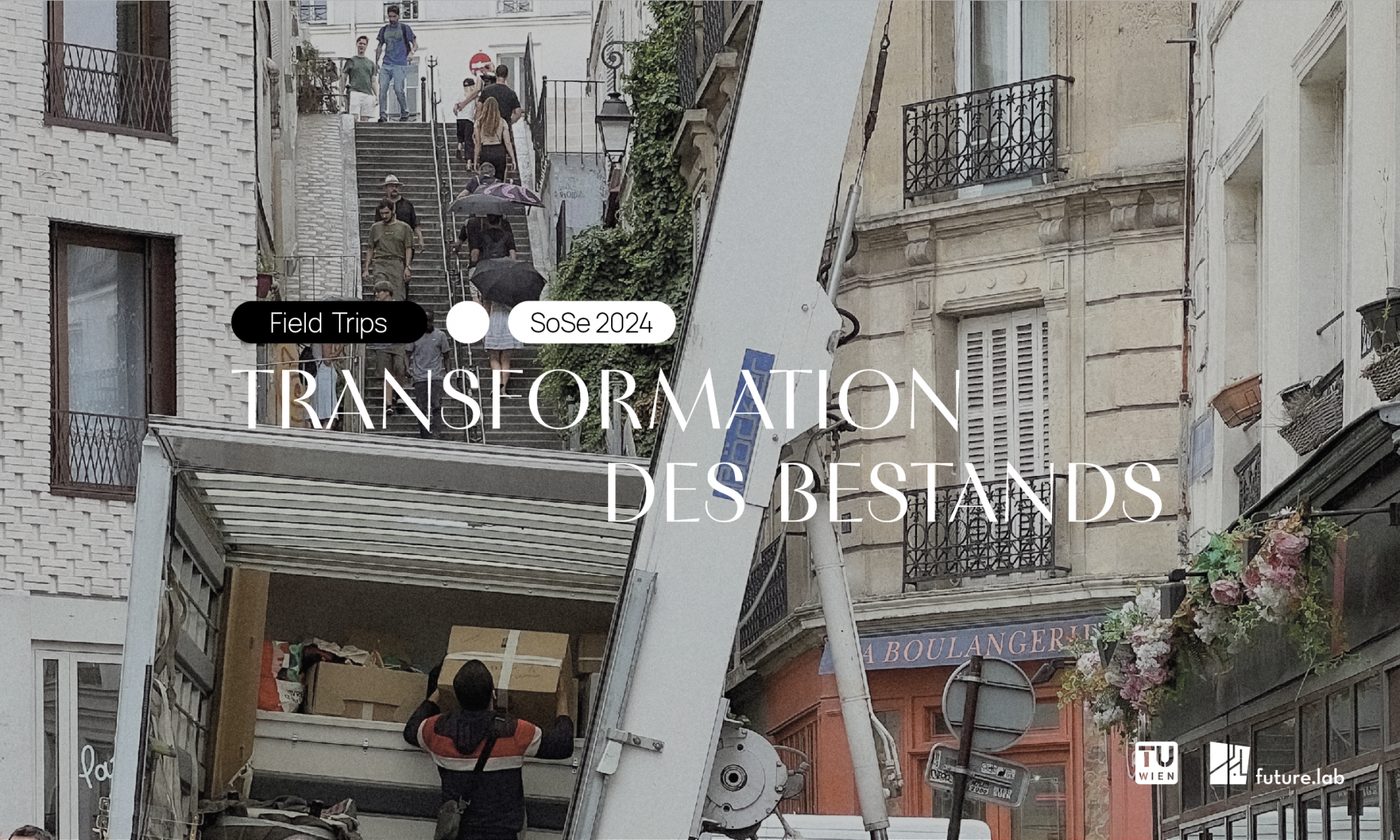
In the summer semester of 2024, the field trips will focus on the transformation of existing urban structures. The expeditions will visit projects and neighborhoods in European cities and analyze their results and processes in context. One focus will be on aspects of social innovation.
Each group of three students will select one of the predefined projects and develop a research design based on the task at hand, combining classical empirical and creative interventionist methods. The expedition will be followed up and presented not only with a scientific report, but also with supplementary media such as podcasts, photography, and journalistic texts.
The “Field Trips” format
Since 2016, Field Trips have provided a framework for master's students in architecture and spatial planning to conduct independent expeditions to a wide variety of European cities. Experimental and art-based methods are used for the field research, which usually lasts six to ten days. Unlike in previous years, the focus is no longer on public space, but on examining existing buildings.
Students develop a research design and write a research proposal for the travel grant. Once the proposal has been approved, the trips can be booked and organized. They conduct the field research independently, evaluate the material, and finally produce a radio feature/podcast, an exhibition contribution, and a report. There will also be workshops on the topics of “radio,” “journalism,” and “photography.”
Course content
- Design a research plan for (partly experimental) field research on the topic of inventory development
- Write and present a research proposal
- Independently plan and implement a research trip
- Collect material in the field using different methods and media and evaluate it scientifically
- Learn to design and implement supplementary communication media (radio/podcast, photography, text) with external input in order to write a scientific report
Cooperation
This year's edition is being held in cooperation with the future.lab innovation workshop. Mara Haas and Andreas Bernögger will contribute their expertise in social innovation and empirical research and accompany the students throughout the semester.
Schedule
Phase 1: Preparation (March/April)
In the first phase, the groups will prepare a research proposal (due April 30). The third session will feature a presentation of the research projects (March 19). Only after this step will the trips be approved.
The preparation phase concludes with a research proposal that outlines the content, methodology, practical arrangements, and financial framework of the expedition. Only after the proposal has been approved can the financial resources be committed.
Phase 2: Expedition (May)
Between May 8 and May 27, 2024, the teams will independently conduct a six- to ten-day expedition to their respective cities. They will observe, conduct interviews, record,
draw, play, intervene... and document their findings.
Phase 3: Evaluation and communication (June)
The results of the expedition will be evaluated and a report will be prepared based on the application. In addition, a radio report will be edited, photo elements will be created, and an exhibition contribution and an article about the project will be written.
Further information
The course is aimed at master's students in the two fields of architecture and spatial planning. Architecture students can have the course credited as a module (10 ECTS) + free electives (2 ECTS). (Crediting in the sense of a module including supplementary subjects is not possible.)
The course will be conducted in groups (approx. 3 students, mixed architecture/spatial planning). In addition to support from the course team, there will be input on photography, radio, and article writing.