
Gastprofessur future.lab
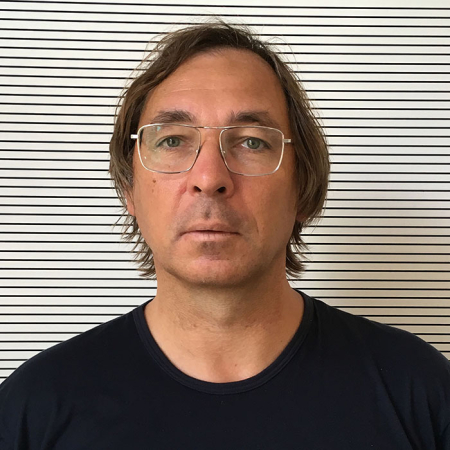
Stefan Rettich is an architect and Professor of Urban Design at Universität Kassel. From 2011 to 2016, he was Professor of Theory and Design at Hochschule Bremen; prior to that, he taught for four years at the Bauhaus Kolleg in Dessau. He is a founding partner of KARO* architekten.
His work focuses on fundamental questions of space and politics, strategies for sustainable urban and inner-city development, as well as the obsolescence of buildings and their potential for transformation. Rettich is a member of the Deutschen Akademie für Städtebau und Landesplanung (DASL), the Sächsischen Akademie der Künste (SAdK), the Bund Deutscher Architekten (BDA), and serves on the IBA-Expertenrat of the Bundesministerium für Wohnen, Stadtentwicklung und Bauwesen.
He is the editor and author of numerous publications, including Die Obsolete Stadt – Wege in die Zirkularität (with Sabine Tastel, 2025), Zentralitäten 4.0 – Raumpolitiken und neue Mobilität auf dem Lande (with Philipp Oswalt, 2023), and Die Bodenfrage – Klima, Ökonomie, Gemeinwohl (with Sabine Tastel, 2022).
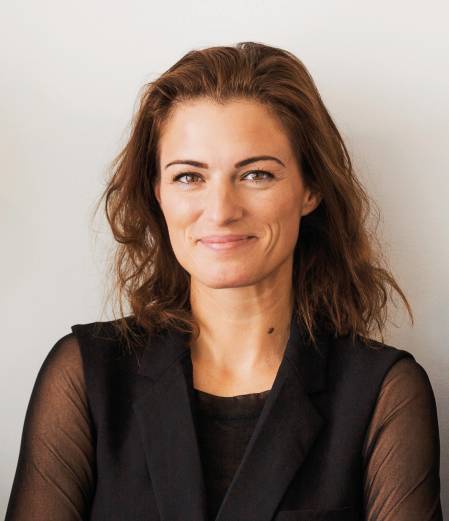
Mag. Dr. Verena Konrad is an art historian with a doctorate specializing in architectural and design history, as well as a curator, author, and cultural manager. Since 2013, she has been the director of the Vorarlberger Architektur Institut (https://v-a-i.at/) as a cultural and educational organization dedicated to architecture and building culture mediation. For several years, she served on the Raumplanungsbeirat of the Land Vorarlberg. She is currently a board member of the Energieinstitut Vorarlberg. As the Austrian representative of the parliamentary citizens’ initiative HouseEurope! (https://www.houseeurope.eu/), she is in active exchange with relevant stakeholders, initiatives, planners, and activists. It is particularly important to her to bring these networks and her expertise into her teaching.
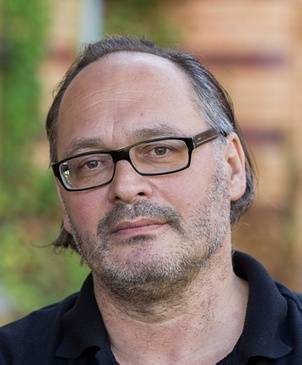
Dr. habil. Fritz Reusswig from the Potsdam-Institut für Klimafolgenforschung is an interdisciplinary sociologist with a background in philosophy. His work focuses on various facets of urban transformation in the context of climate change. Among other projects, Fritz Reusswig has developed climate adaptation concepts for cities such as Potsdam, Bamberg, and Augsburg. He has published on how cities can learn from those whose current climate conditions resemble their own future climates, and has examined the impacts of climate mitigation measures on different social milieus as well as the resonance and public responsiveness of climate policy. His work productively brings together social and ecological questions with analyses from both the natural and social sciences. We are very pleased that he accompanied the field trips in the summer semester 2023.
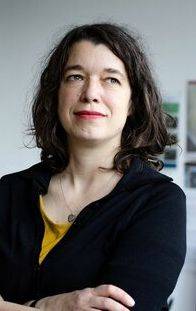
Nina Schuster studied Sociology, Spanish, and French in Marburg and Cáceres, Spain, and received her doctorate in Sociology from Philipps-Universität Marburg in 2010. From 2005 to 2021, she was a member of the Faculty of Spatial Planning at TU Dortmund, where she conducted her DFG research project „Sozialer Wandel und der alltägliche Umgang mit Differenz in der Stadt: Banale Transgression im Kleingarten“ from 2018 to 2021. She is currently affiliated with Universität Duisburg-Essen. Her research focuses on the production of social inequality in urban processes, often from a queer/feminist perspective. Her work addresses, among other topics, the negotiation of difference in urban micro-publics, gentrification and social mixing, segregation and labor. She is co-editor of sub\urban. zeitschrift für kritische stadtforschung.
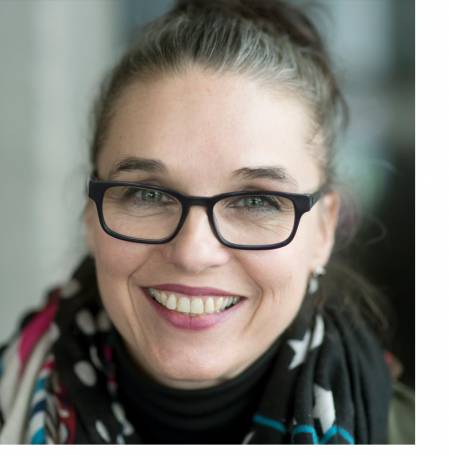
She is an artist, researcher, scholar, and curator at Ars Electronica Linz, where she co-developed the department Ars Electronica Export together with Artistic Director Gerfried Stocker and led it operationally for nearly 18 years. Since October 2020, M. Naveau has been Professor of Critical Data / Interface Cultures at Kunstuniversität Linz and has held teaching positions at Paris Lodron Universität Salzburg and Donau-Universität Krems. Her book “Crowd and Art – Kunst und Partizipation im Internet” was published in 2017 by transcript Verlag, Germany. The book is based on her doctoral dissertation, for which she received the Award of Excellence from the Bundesministerium für Wissenschaft, Forschung und Wirtschaft in 2016.
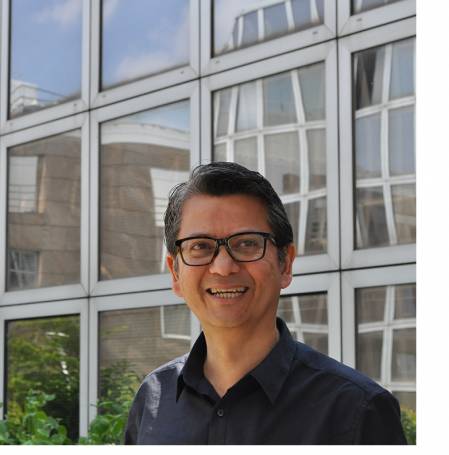
He studied architecture and urban planning in Vienna and Brazil. His teaching and research activities at TU Wien and other institutions focus on current issues in international urbanism. Over the past 20 years, he has gained experience in around fifty cities across four continents. He is particularly interested in urban innovation, new learning landscapes (“educational urbanism”), and automated mobility. He is currently conducting research on digital platforms, civic tech, and the co-creative city in the digital age.
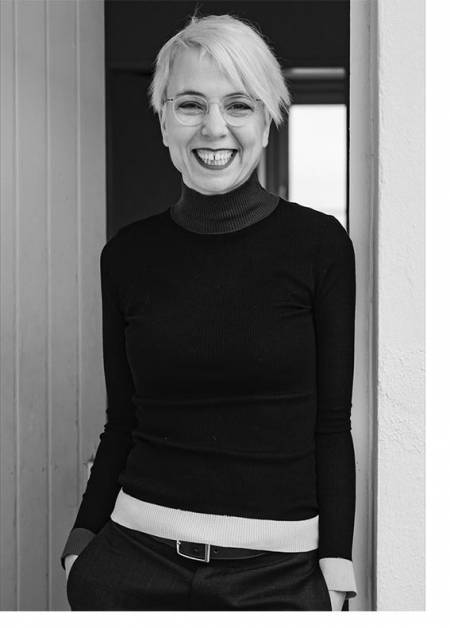
She is an architect, urban planner, and urban researcher. She studied architecture, urban planning, and social sciences in Stuttgart, Delft, and London. From 2005 to 2011, she was a research associate at TU Darmstadt and HafenCity Universität Hamburg, where she completed her doctorate under Michael Koch and Martina Löw on social housing and gentrification in London. Since 2008, she has run the office urbanorbit together with Mario Tvrtkovic. Since 2011, she has been Professor of Urban Design at Frankfurt University of Applied Sciences, where she currently heads the research lab Siedlungsbau und Baukultur der Nachkriegsmoderne. She has always had a particular interest in large housing estates, elevated highways, and concrete “monsters” of all kinds.
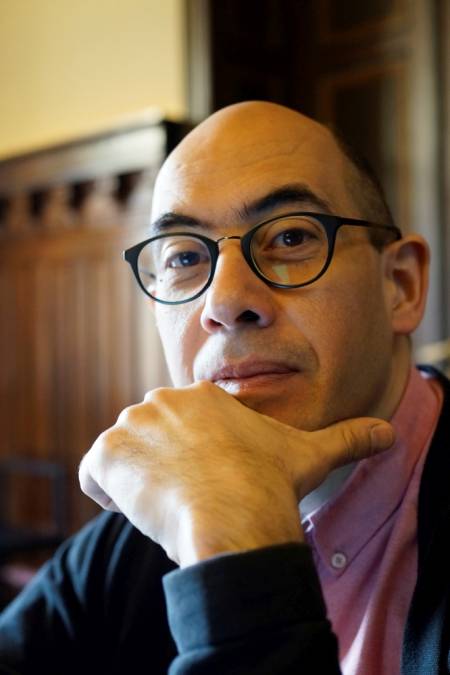
Born in 1972. Editor-in-chief of the international architecture magazine Zeppelin and co-founder of Zeppelin Association. Assistant Professor at the Ion Mincu University of Architecture and Urbanism, Bucharest. Practicing architect, curator and critic. Author of Transparent City. Limits and dwelling in Bucharest, co-author and co-editor of 9 books and several exhibitions and research projects. He’s an independent expert for the European Union Prize for Contemporary Architecture – Mies van der Rohe Award. Awards in the last 10 years include: finalist at the European Public Space of the Year 2011, several prizes and nominations at national and Bucharest architecture exhibitions and the first prize at the national competition and realization of the Romanian pavillion for the 2006 Venice Architecture Biennale. Current research interests are contemporary architecture and urban culture, public space, low-budget processes, urban and building regeneration, South-Eastern Europe, community architecture.
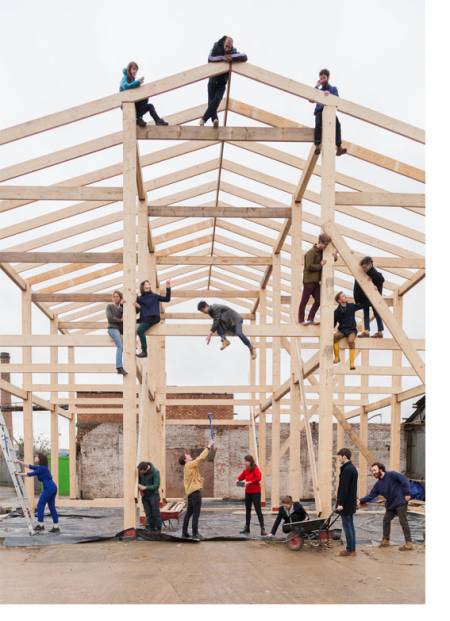
Assemble are a collective based in London who work across the fields of art, architecture and design. Their working practice seeks to address the typical disconnection between the public and the process by which places are made. Assemble champion a working practice that is interdependent and collaborative, seeking to actively involve the public as both participant and collaborator in the on-going realisation of the work.
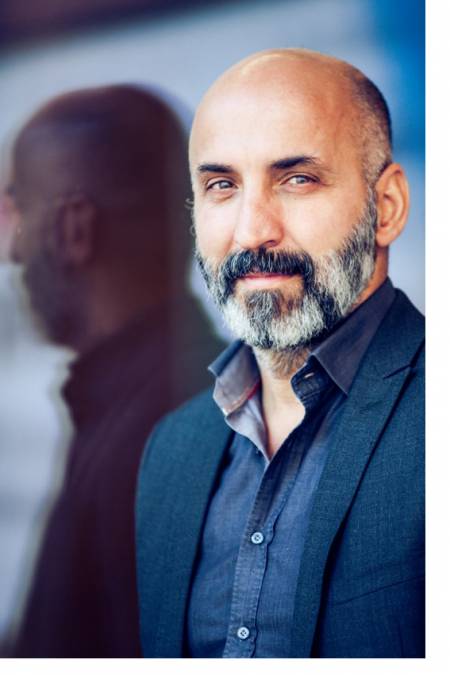
Dipl. Soz., a German-speaking European with Kurdish-Turkish roots, is the founder of the office Gesellschaft | Organisation | Entwicklung [think.difference] in Vienna. As an organizational consultant and international expert on integration and diversity issues, he advises and supports governmental and non-governmental organizations at the federal, provincial, and municipal levels. Among other roles, he has led numerous mission statement and strategy development processes on integration at both state and city levels. As a strategic advisor, he supported the City of Vienna for several years on integration- and diversity-related matters. He is also a member of the independent Expert Council of the Austrian Federal Government and serves as Chair of the Expert_Forum Prävention, Deradikalisierung & Demokratiekultur of the City of Vienna. His main areas of expertise include social change, integration, participation, diversity, organizational development, urban sociology, youth, identity, conflict and violence analysis, and radicalization.