
#12 Living in existing buildings
In the twelfth episode, curated by Judith Lehner and Margarete Haderer, architect Silja Tillner and sociologist Christoph Reinprecht discuss the challenges and potentials of housing in existing buildings, as well as the need for experimental spaces in residential construction. Silja Tillner calls for more flexibility in dealing with regulations to enable innovative forms of housing, while Christoph Reinprecht emphasizes the importance of adaptable structures for residents’ well-being. Judith Lehner addresses the challenges of different disciplines regarding housing in existing buildings in the context of the socio-ecological transformation. Margarete Haderer raises the question of how building can be rethought in times of the climate crisis, given the ongoing desire for new single-family homes despite the urgent need to reduce new construction.


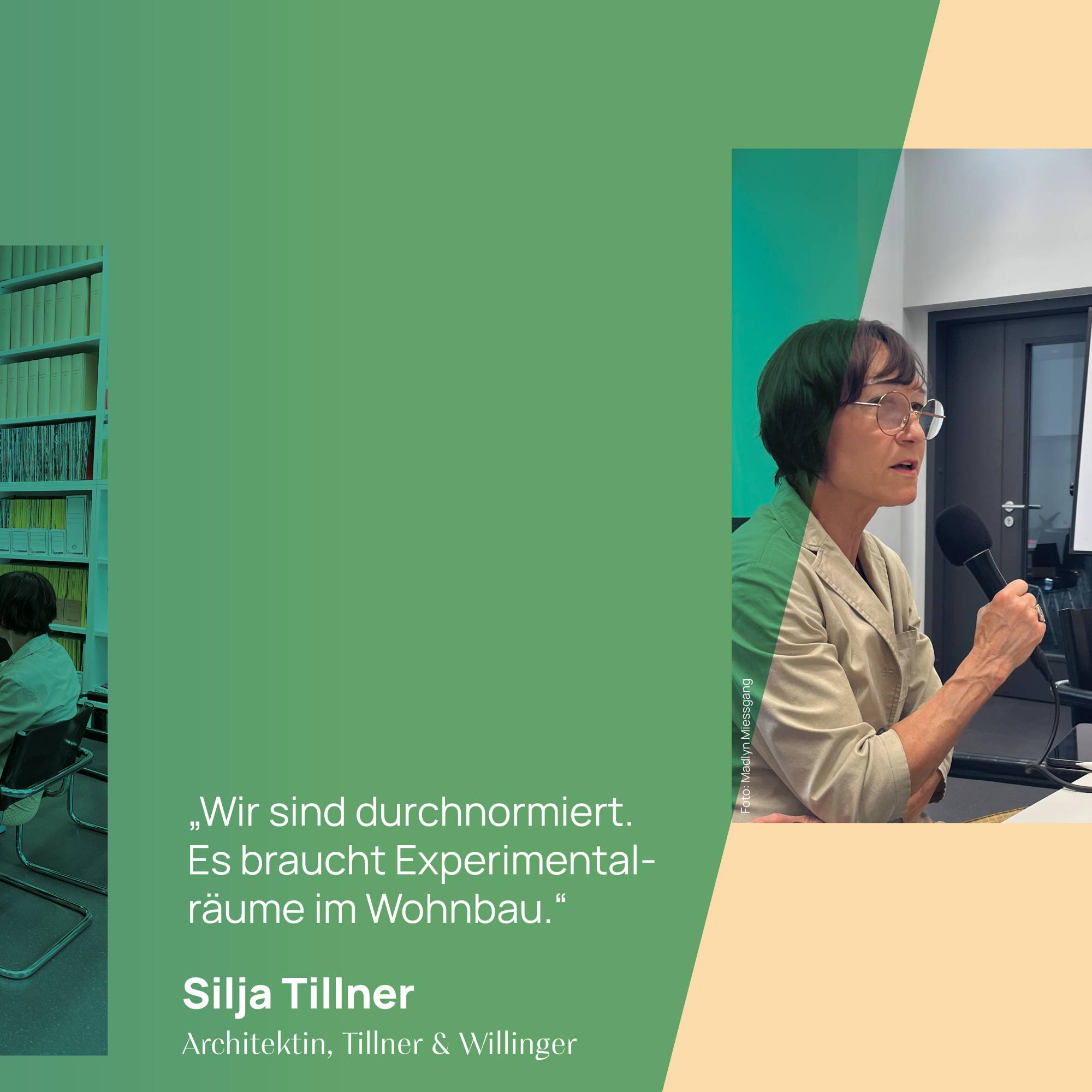
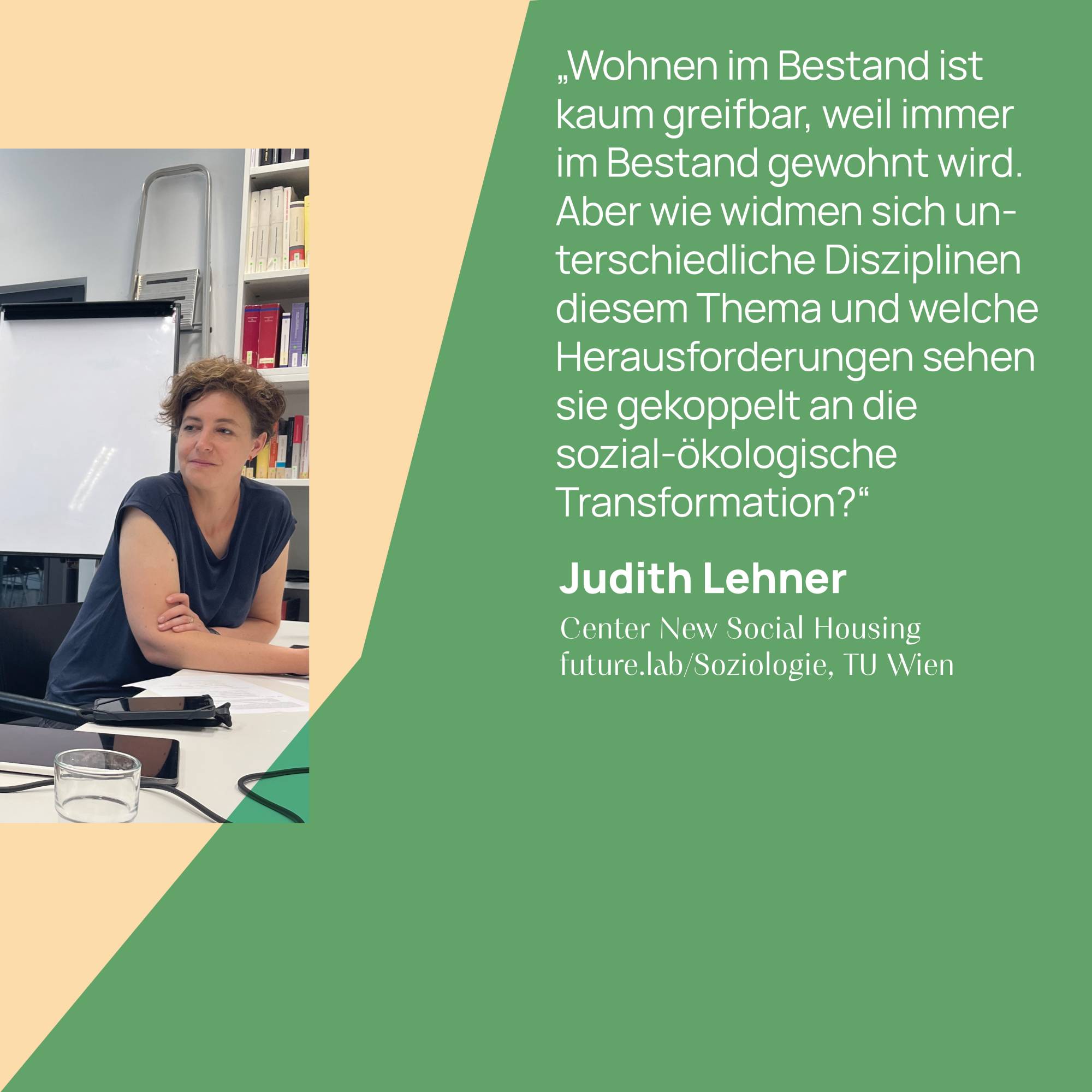
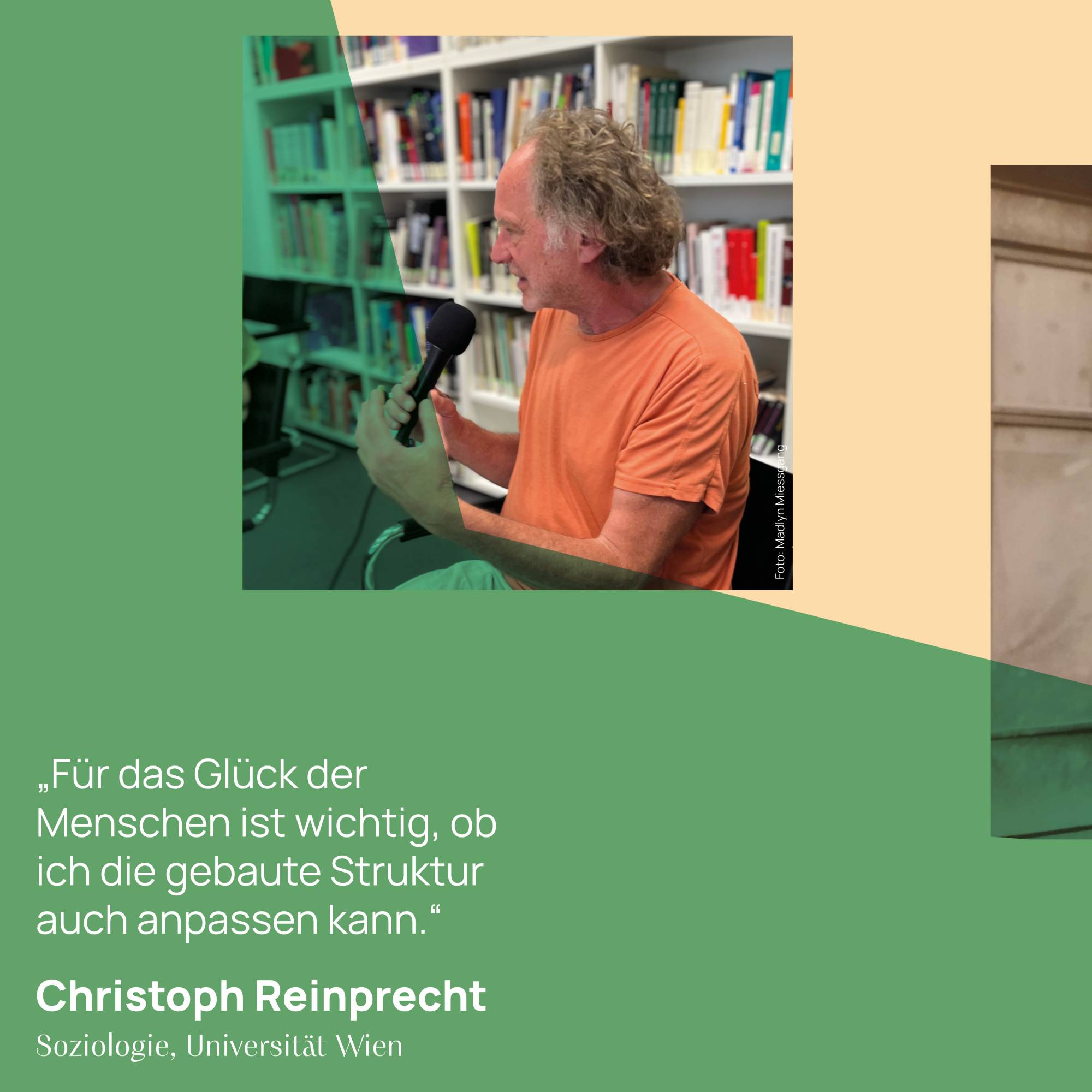
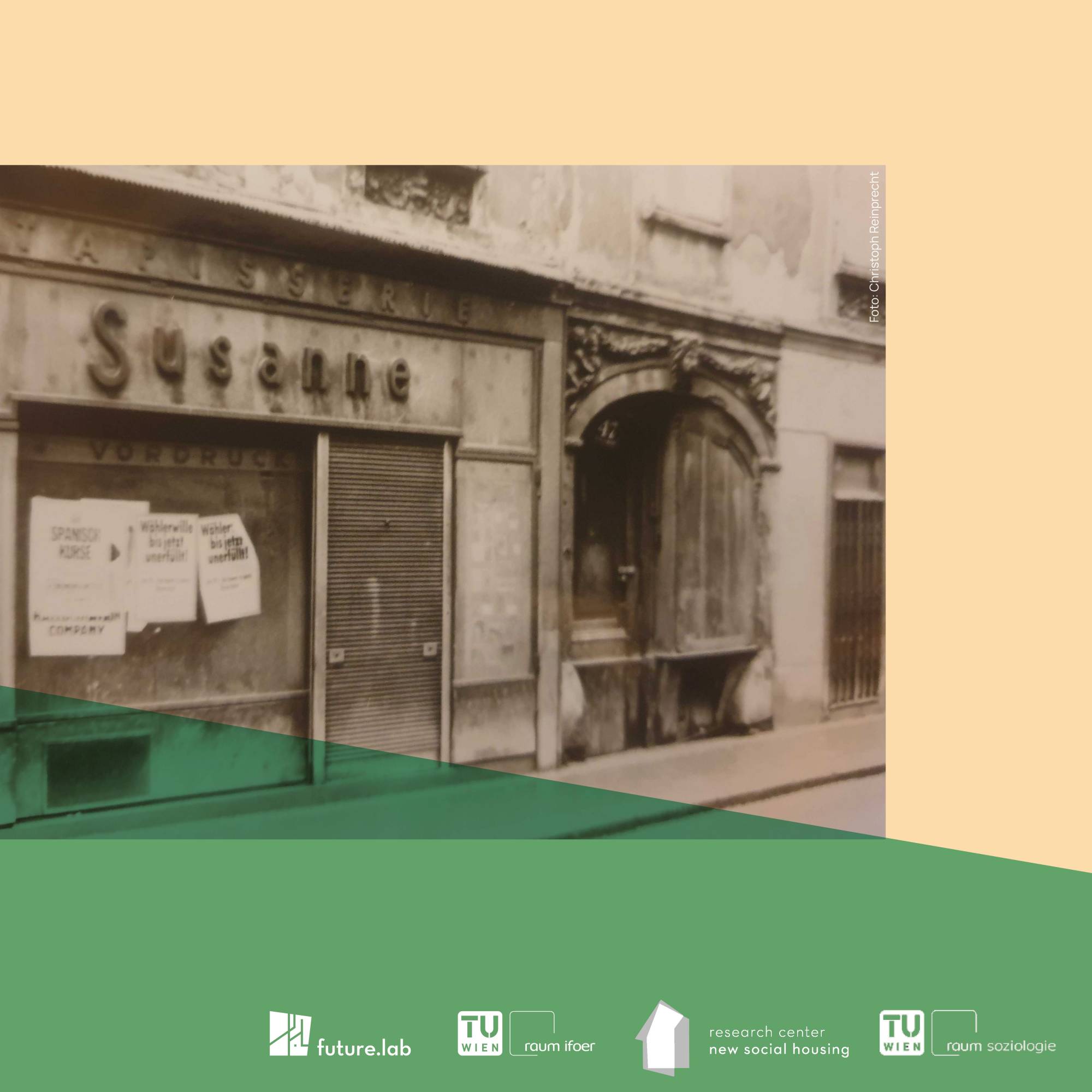
In Episode 12, Judith Lehner and Margaree Haderer speak with Silja Tillner and Christoph Reinprecht about housing in existing buildings. The guests share their personal housing biographies and place them in the context of the topic.
Silja Tillner
is an architect and urban planner who studied at TU Wien, the Academy of Fine Arts Vienna, and the University of California, Los Angeles. She is co-head of the architectural office Tillner & Willinger and lives in the Werkbundsiedlung in Vienna in the house by Gerrit Rietveld.
https://www.tw-arch.at
Christoph Reinprecht
is a professor at the Institute of Sociology at the University of Vienna, where he focuses on cities, migration, social inequality, and social housing. He has lived for many years in various Gründerzeit buildings.
http://www.soz.univie.ac.at/christoph-reinprecht
Judith Lehner
coordinates the Research Center New Social Housing as a postdoctoral researcher, promoting institutional networking between disciplinary scientific fields and transdisciplinary collaboration among actors in Viennese housing production through teaching and research formats.
https://futurelab.tuwien.ac.at
Margaret Haderer
is a university assistant in the Research Unit of Sociology at TU Wien. Her research focuses, among other things, on how society manifests in space and how social relations are negotiated through space.
https://www.tuwien.at/ar/soziologie
Studies, publications, and initiatives mentioned in the podcast:
Werkbundsiedlung Vienna: https://www.werkbundsiedlung-wien.at/
Haderer, M. (2023). “Building for New Men: Two Approaches to Social Emancipation,” in: Margaret Haderer, Rebuilding Cities and Citizens: Mass Housing in Red Vienna and Cold War Berlin. Amsterdam University Press, pp. 45-55.
Hayden, D. (1980). What Would a Non-Sexist City Be Like? Speculations on Housing, Urban Design, and Human Work. Signs, 5(3), pp. 170–187. http://www.jstor.org/stable/3173814
The dream of a single-family house: https://www.diepresse.com/18777509/einfamilienhaus-der-traum-vom-haus-am-land
Energieinstitut Vorarlberg, FFG-funded research project on the transformation of single-family house settlements “BONSEI! – Optimally Using Existing Buildings, Implementing Energy-Efficient Renovation / 2016-2018”: https://www.energieinstitut.at/forschung-und-projekte/bonsei-bestand-optimal-nutzen-sanierung-energieeffizient-implementieren
Harvard Study of Adult Development: https://www.adultdevelopmentstudy.org/
Article on the study: https://www.derstandard.at/story/2000142991328/jahrzehntelange-studie-enthuellt-was-uns-wirklich-gluecklich-macht
Werner Sobek – sustainable engineering and design: https://www.wernersobek.com/de/
Hohenems town center revitalization – Austrian Architecture and Sustainability Award 2024: https://www.hohenems.at/news/staatspreis-architektur-und-nachhaltigkeit-2024-fuer-hohenems/
Podcast information
The podcast ZUKUNFT STADT is a project of the Faculty of Architecture and Spatial Planning at TU Wien. It is produced in cooperation between future.lab and the Research Unit of Local Spatial Planning at TU Wien.
Concept and production, audio and editing: Lukas Bast, Lena Hohenkamp, Lisa-Marie Kramer, and Madlyn Miessgang
Intro music: Jakob Kotal