
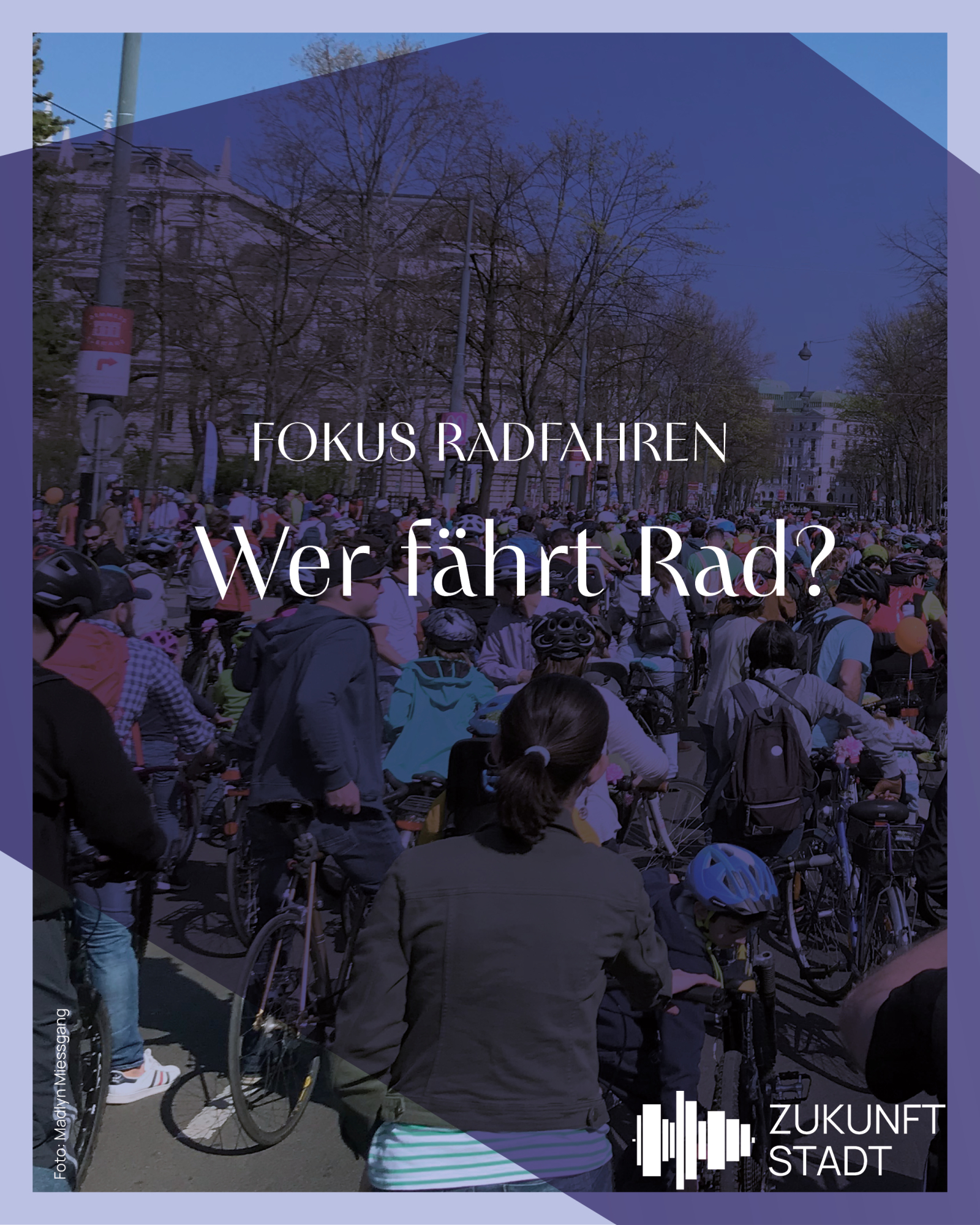
#41 Focus on Cycling: Who Cycles?
In the second episode of our mini-series on cycling in urban areas, we explore the diverse ways in which bicycles are used today—from traditional everyday bikes and e-bikes to cargo bikes and bike-sharing services. The bicycle is no longer a one-size-fits-all mode of transportation, but rather a spectrum of solutions tailored to different lifestyles.
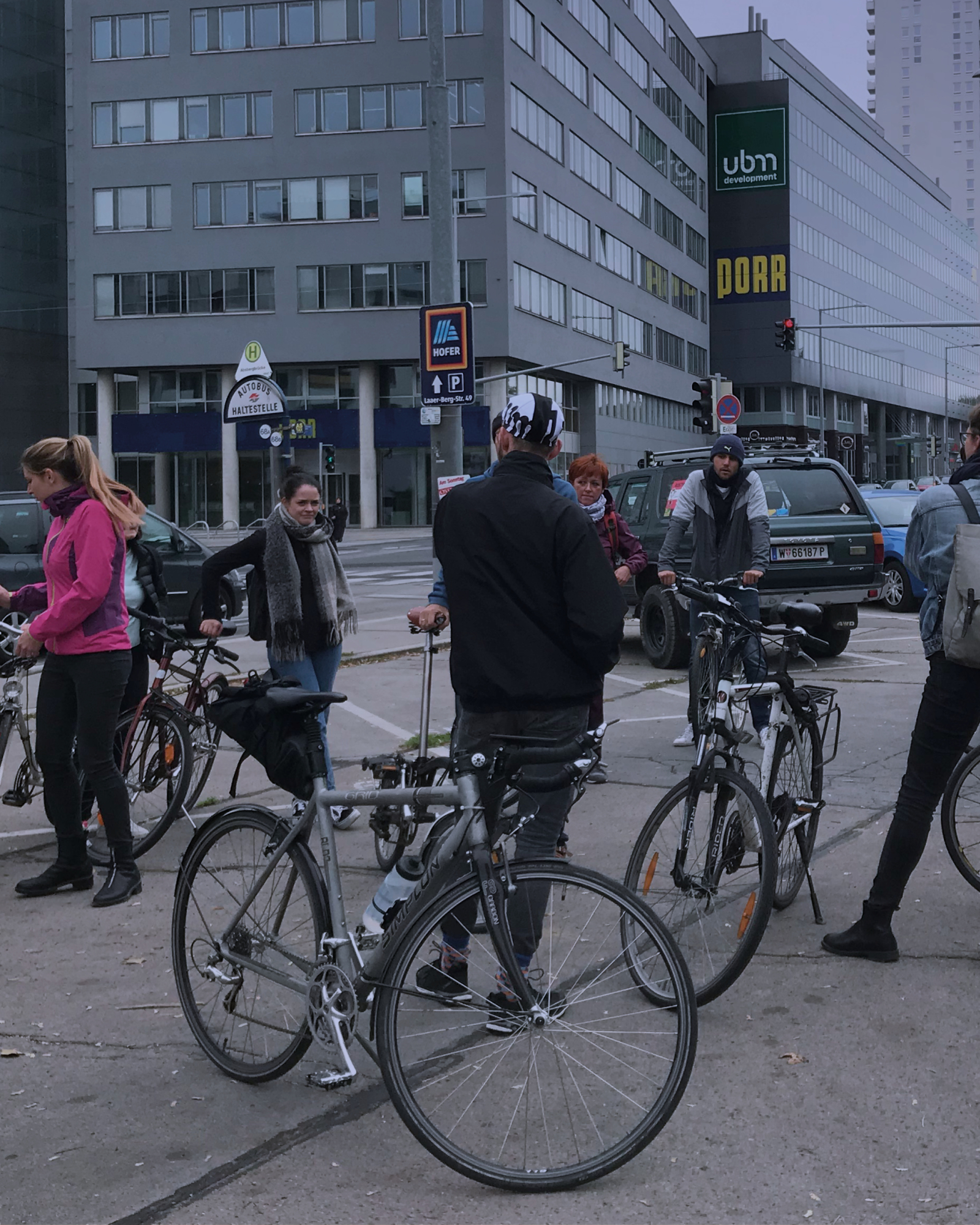
We discuss when and for whom the bicycle actually becomes an alternative to the car—in daily work life as well as in the organization of family life and caregiving. What structural conditions are needed for such models to become the norm rather than the exception? We’ll also take a look at early mobility experiences and initiatives like the Bicibus, as well as the role of cycling initiatives in Vienna. How does change come about—through government, politics, or civic engagement?



Aurelia Kammerhofer is a research associate in the Mobility Systems Planning (MUF) research group at TU Wien. Through numerous research projects, she examines the use of cargo and transport bicycles in everyday life, in businesses, and in urban freight transport. Her focus is on the practical testing of new forms of mobility and the potential of active mobility for different user groups.
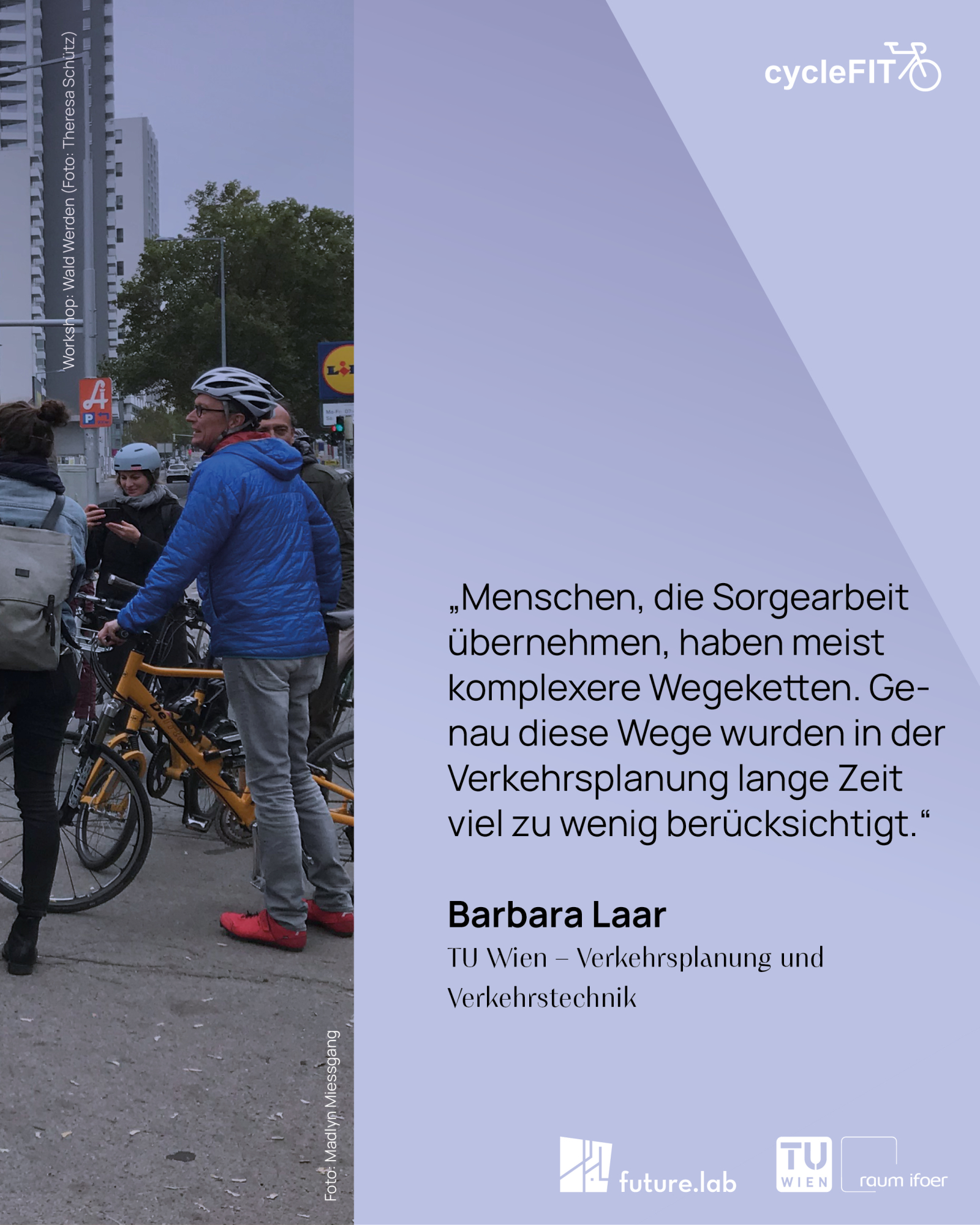
Barbara Laa is a research associate in the Transportation Planning and Engineering Research Group at TU Wien’s Faculty of Civil and Environmental Engineering. Her work examines the interactions between transportation infrastructure, mobility behavior, and sustainable transportation planning. A particular focus is on the needs of different population groups for safe and attractive bicycle networks.
Valentin Eisendle is the chair of Radlobby Wien and advocates for better conditions for everyday cycling in the capital. Together with numerous volunteers, he works to promote safe, comfortable, and continuous cycling infrastructure, as well as measures to strengthen active mobility in Austria.
Madlyn Miessgang works in the field of architecture, urban planning, and science communication at the future.lab of the Faculty of Architecture and Spatial Planning at TU Wien. She is part of the cycleFIT team and supports the initiative in the areas of outreach and visual communication.
Florian Pühringer conducts research and teaches at the MOVE Transportation Systems Planning Research Group at TU Wien. As a member of the cycleFIT core team, he is also committed to promoting sustainable mobility and the transition to a future-proof mobility system at TU Wien.
Kurt Weninger is a senior lecturer in the Land Policy and Land Management Research Group at TU Wien. As project manager of cycleFIT, he works to establish bicycle mobility at TU Wien.
Podcast Credits
Episode #41
Concept and Hosts: Madlyn Miessgang, Florian Pühringer, and Kurt Weninger (cycleFIT Initiative); The cycleFIT Initiative is all about bicycles, cycling, and bicycle traffic around and at the TU Wien campuses. Together with students and staff, we develop concrete solutions for a bicycle-friendly TU Wien and aim to increase the number of people who ride their bikes to campus. Initiative website: https://www.tuwien.at/futurefit/cyclefit
Recording, audio, and editing: Madlyn Miessgang and Nico Schleicher
ZUKUNFT STADT Podcast Production: Lukas Bast, Larissa Benk, Lisa-Marie Kramer, Lena Hohenkamp, Madlyn Miessgang, and Nico Schleicher
Intro music: Jakob Kotal
The ZUKUNFT STADT podcast is a project of the Faculty of Architecture and Urban Planning at TU Wien. It is produced in collaboration between future.lab and the Local Spatial Planning Research Group at TU Wien.