
#50 Politics, Planning, and Participation: The End of Post-Political Planning?
In Episode #50, Larissa Benk speaks with Gabu Heindl, Nikolai Roskamm, Alexander Hamedinger, and Gesa Witthöft about the relationship between current political trends and urban planning. Against the backdrop of the post-political debate, the discussion centers on whether fundamental issues of urban development policy and planning are being adequately addressed, what role activist initiatives can play in this context, and what perspectives—including those for discussion—are emerging in light of the shift to the right. The conversation examines current practices in urban planning research and uses specific projects to illustrate how collectivity and principles of distribution can be reimagined.
A key reference point for this episode is the article by Erik Swyngedouw in the special issue “The Post-Political City?”, published in 2013 by sub\urban: Journal of Critical Urban Studies.
This conversation is the first part of a mini-series on politics, planning, and participation, curated and produced by Gesa Witthöft, Lukas Bast, and Larissa Benk.


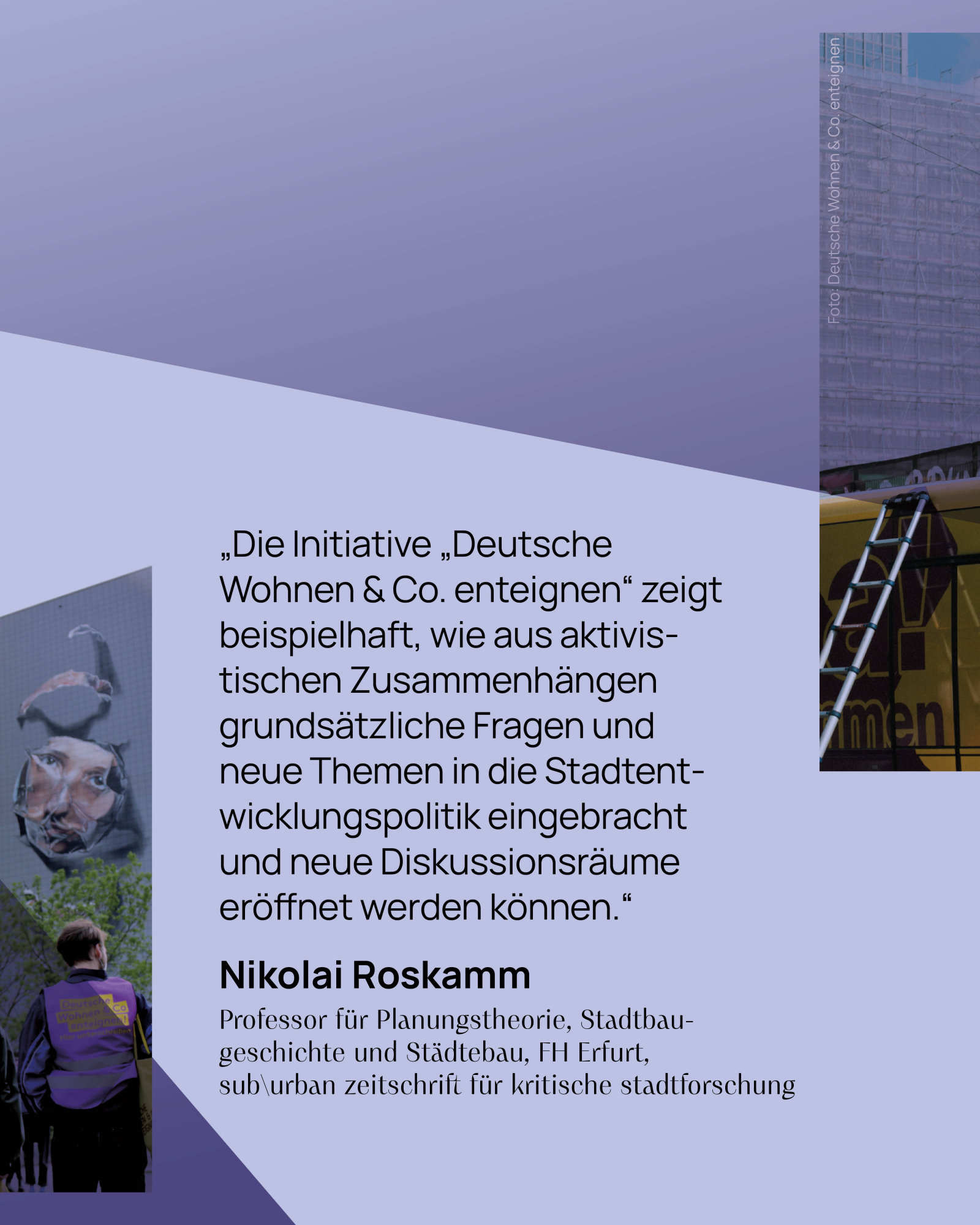
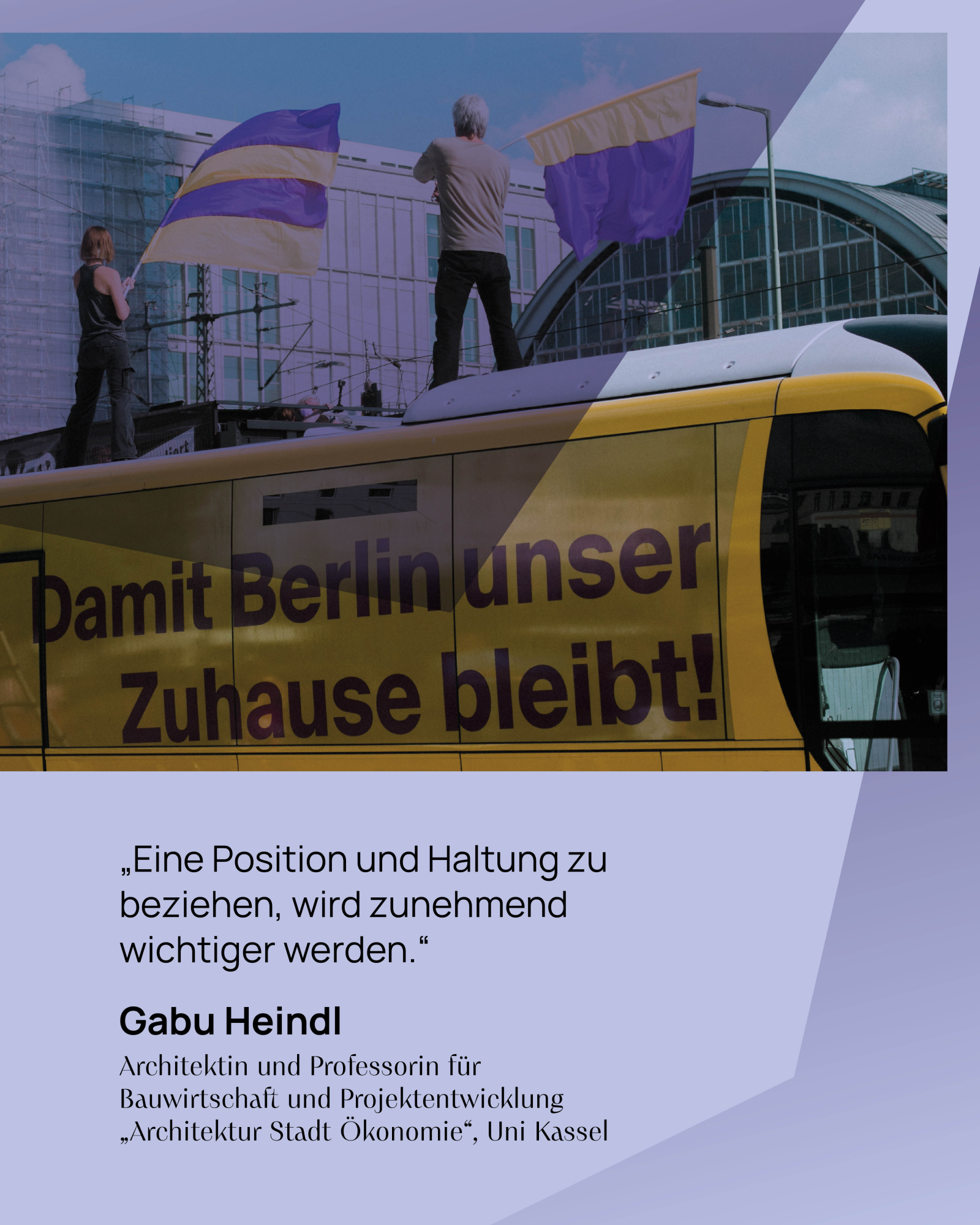
Gabu Heindl is a professor and head of the “Architecture, City, and Economy” department at the University of Kassel. As an architect with a Ph.D. in philosophy, she conducts research and works on public space, affordable housing, and social and political issues related to architecture and urban planning. She heads the firm GABU Heindl Architektur, which focuses on public buildings, urban development, and critical architectural practice.
Gesa Witthöft works in the Sociology Research Division at TU Wien, drawing on her interdisciplinary background and freelance experience in the fields of urban planning, urban development, and urban renewal. She earned her Ph.D. in 2008 with a dissertation titled “Conceptualizing the Urban: Society-Oriented Urban Development at the Intersection of Inner-City Development and Project-Based Planning.” In addition, she is actively involved in the Working Group on Equal Treatment Issues at TU Wien (AKG).
Nikolai Roskamm is a professor of planning theory, urban history, and urban design at the University of Applied Sciences Erfurt. He earned his doctorate at the Bauhaus University Weimar and completed his habilitation at the Technical University of Berlin in the fields of philosophy of science and urban studies. In addition, he served as a visiting professor sponsored by the City of Vienna at the interdisciplinary Center for Public Space and Urban Culture at the Vienna University of Technology. He is also a member of the editorial collective of *sub\urban: Journal for Critical Urban Research*.
Alexander Hamedinger is an urban researcher in the Sociology Research Group at the Institute for Spatial Planning at the Vienna University of Technology. He is an associate professor with teaching authorization in urban and regional sociology and is currently conducting research in the areas of urban and regional governance, social inequality and space, planning theory, urban development, and transdisciplinarity in planning.
Credits
Episode #50
Concept and hosts: Lukas Bast, Larissa Benk, Gesa Witthöft
Recording, audio and editing: Lukas Bast, Larissa Benk
Fotocredits:
ZUKUNFT STADT Podcast Production: Larissa Benk, Lisa-Marie Kramer, Lena Hohenkamp, Madlyn Miessgang and Nico Schleicher
Intro Music: Jakob Kotal
The ZUKUNFT STADT podcast is a project of the Faculty of Architecture and Planning at TU Wien. It is produced in cooperation between the future.lab and the Department of Local Spatial Planning at TU Wien.